Scientists Discover Hidden Brain ‘Hyperarousal’ Link Behind Anxiety, Insomnia and Burnout, Identify Seven Distinct Types
A growing number of people suffering from sleeplessness, anxiety, burnout, or attention problems frequently describe the same tiresome sensation: a mind that refuses to shut off. Scientists believe they have discovered a secret biological basis for this shared experience, revealing seven distinct kinds of a brain state known as 'hyperarousal' that could change how mental health illnesses are understood and treated.
According to researchers at the Netherlands Institute for Neuroscience, the study may help explain why many people are diagnosed with multiple mental health conditions at the same time. Insomnia, depression, anxiety disorder, post-traumatic stress disorder, and attention deficit hyperactivity disorder frequently coexist, leaving patients and clinicians looking for the underlying causes.
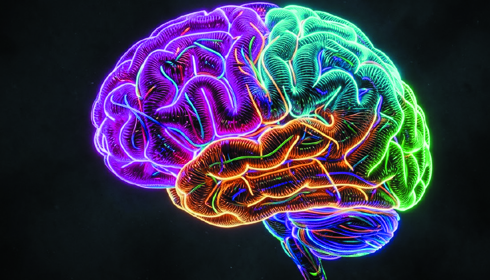
The focus of the study is hyperarousal, a word used by scientists to describe a situation in which the brain remains extremely awake even when the body needs rest. Simply put, it's like having a nervous system stuck in "high gear", making it impossible to relax, sleep, or manage emotions.

"In sleep research, we already know a lot about the role of hyperarousal in insomnia," says first author Tom Bresser. "But hyperarousal also plays a major role in many other mental disorders. Bresser and his colleagues asked if all of these varieties of hyperarousal are the same or if they differ. "If we better understand what hyperarousal really is, we can also better understand insomnia, anxiety, and depression," according to him.
To study the question, the research team created a comprehensive survey that included several psychological questionnaires commonly used in mental health investigations. Nearly 500 volunteers from the Dutch research platform Sleepregister. NL completed the survey and provided information on sleep patterns, mood, stress levels, and behavioural symptoms.
When scientists evaluated the data, they discovered that hyperarousal did not occur in a single, consistent form. Instead, the data indicated seven separate types of hyperarousal, each of which affects people differently based on their mental health.
Almost every type of hyperarousal showed in several illnesses, but the intensity varied. For example, people suffering from insomnia may experience one pattern more strongly, but those suffering from anxiety or PTSD may exhibit another. This study implies that what appear to be distinct disorders may in fact share underlying basic pathways within the brain, suggesting that a unified approach to treatment could be beneficial for individuals suffering from these conditions.
Based on the findings, the researchers developed a shorter and more practical questionnaire to better quantify the various forms of hyperarousal in future investigations. "Instead of having to search for the right combination of questionnaires, researchers can now use this tool to map hyperarousal much more easily and comprehensively," according to Bresser.
Scientists at the sleep lab are already utilising the new tool in studies on insomnia and anxiety. The researchers are also investigating which brain regions may be responsible for the various hyperarousal patterns.
Bresser believes that the methodology will eventually enable psychologists to move beyond the traditional trial-and-error method of mental health therapy. "Often someone comes to a psychologist with disorder A, but it turns out they also have a predisposition for disorder B or C," he says. "By using the combined questionnaire, the underlying forms of hyperarousal can hopefully become clearer."
If further research validates the findings, doctors may be able to develop medicines that specifically target the sort of hyperarousal impacting a patient's neural system. Such personalised solutions could be a significant step toward more precise and successful mental health treatments.
Be first to post your comments