Mother's Observation During Routine Bath of 2-Year-Old Leads to Early Kidney Cancer Detection
What was seemingly a harmless swelling that was seen during a regular bath, turned out to be a lifesaving discovery for a two-year-old boy from Nashik, highlighting how a parent’s gut feeling can be the first line of defence sometimes against silent childhood cancer.
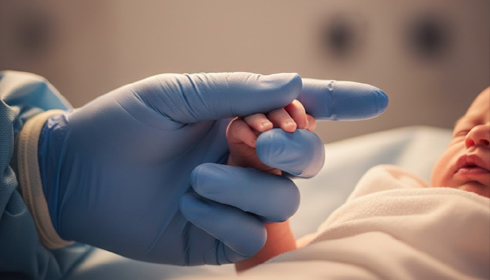
Doctors at the Nashik based HCG Manavata Cancer Centre (HCGMCC) have successfully treated a two-year-old child, Atharwa, diagnosed with Wilms’ tumour, the most common kidney cancer in children. Surgeons removed a tumour weighing nearly one kilogram from the boy's body, despite the child himself weighing only 11 kilograms. Within days of surgery, he was back at home playing and smiling again.
The case highlights a growing body of evidence showing that early detection can dramatically improve outcomes in childhood cancers. According to the World Health Organization (WHO), survival rates for childhood cancer can exceed 80 per cent often when diagnosis and treatment occur early. Wilm’s tumour which occurs mostly in children under five years of age is one of the most treatable childhood cancers if caught before it has spread.
Atharwa’s mother first noticed a strange swelling in his belly when she bathed him. The family didn’t think it was anything serious at first as the child kept playing and didn’t complain of any pain. Later the situation changed when he started passing blood in his urine and he was immediately rushed to hospital.
Investigations, including sonography and PET-CT scans, confirmed that the patient had a large tumour in the left kidney, doctors said. Luckily, the cancer had not spread beyond the organ, which improved the chances of successful treatment considerably.
“Based on the sonography report, we conducted investigations which confirmed that Atharwa was suffering from a Wilms tumour. After detailed discussions with the family, our multidisciplinary team decided to proceed with the surgery. The operation, which lasted for an hour and a half, involved the successful removal of the tumour using advanced surgical techniques designed to minimise blood loss and ensure maximum safety for the young patient, said Prof. Dr Raj Nagarkar, Chief of Surgical Oncology & Robotic Services and Managing Director, KIMS Manavata Hospitals, HCG Manavata Cancer Centre, and Six Sigma, Nashik.
Medical experts say Wilms' tumour often grows quietly. Many children continue to eat, play, and behave normally, even as the tumour enlarges. The first sign of Wilms' tumour is often a painless abdominal swelling. Other warning symptoms may include blood in the urine, a fever, loss of appetite, tummy pain, or high blood pressure.
Research published by the US National Cancer Institute and the American Cancer Society shows that survival rates for localised Wilms' tumours now exceed 90 per cent in many treatment centres, thanks to advances in imaging, surgery, chemotherapy, and supportive care.
“To support a smooth recovery, our doctors employed specialised postoperative pain management techniques, including the placement of a pain control catheter through the back. Atharwa responded exceptionally well and was discharged just three days after surgery. Within days, he was back home, smiling, playing and enjoying the carefree moments of childhood once again,” added Dr Nagarkar.
Like many parents confronted with childhood cancer, Atharwa's family worried about whether their son could lead a normal life with only one kidney. Doctors reassured them that most people can live completely healthy and active lives with a single functioning kidney, provided regular medical follow-up is maintained.
Dr Nagarkar recalled a child who had undergone treatment for the same disease years ago. “Treating cancer in children requires not only medical expertise but also immense emotional support for families. Several years ago, we treated a one-year-old child with a Wilms tumour. He underwent surgery, chemotherapy, and radiation therapy. Today, he is 18 years old and healthy, and he is studying to become an engineer. When such children come back to meet us years later, it is difficult to believe they once battled cancer. Those moments bring immense satisfaction and remind us why we do what we do. Seeing Atharwa recover and return to a normal life is extremely gratifying for our entire team,” he concluded.
For doctors and public health experts, cases like Atharwa's carry an important message. Childhood cancers may be rare, but small changes noticed by parents can make the difference between a difficult battle and a highly treatable disease. Occasionally, a routine bath is all it takes to spot the warning sign that saves a life.
Be first to post your comments