Japanese Scientists Develop Tiny ‘Cancer Clue Catcher’ That Could Make Early Detection Easier and Less Painful
Japanese scientists have developed a sensitive device that can detect microscopic cancer signals from a simple blood sample, raising the prospect of earlier, less invasive diagnosis in the future.
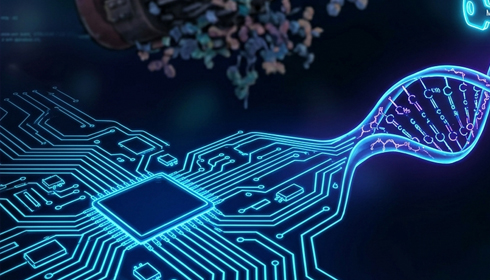
Reporting in the journal Device, the breakthrough is a new microfluidic device that uses advanced zinc oxide nanowires to specifically capture extracellular vesicles (EVs), which are tiny packages of cells that contain important health information.
For patients, the advance could eventually mean fewer invasive tissue biopsies and a greater reliance on liquid biopsies, a technique that gathers disease-related information from blood, urine, or other body fluids. Unlike conventional biopsies, which often require surgery or needle-based tissue extraction, liquid biopsies place far less physical burden on patients.
Researchers from Nagoya University, Hokkaido University, Kyoto University, the Institute of Science Tokyo and the National Institutes for Quantum Science and Technology collaborated on the project. Their goal was straightforward but technically challenging: to identify and isolate cancer-derived EVs hidden among billions of particles circulating in the bloodstream.
The problem with the existing methods is that they are often slow, require relatively large sample volumes, and struggle to differentiate cancer-related EVs from harmless ones. After months of laboratory work, the researchers focused on improving how antibodies — proteins that recognise specific biological targets — attach to zinc oxide nanowires.
The team created six versions of a synthetic polymer called N-hydroxysuccinimide-functionalised polyketone, or pKNHS. Among them, a formulation known as pKNHS 4.2 emerged as the clear winner, showing strong stability and allowing antibodies to bind efficiently in a single step.
Tests on cultured breast cancer cells produced striking results. Nanowires without antibodies captured around 65% of target EVs. Once modified with antibodies, capture efficiency jumped to nearly 90%, demonstrating a much sharper ability to recover disease-related signals.
The researchers then turned their attention to ovarian cancer, one of the world's deadliest gynaecological cancers, because it is frequently diagnosed at an advanced stage. Blood serum samples from six patients with high-grade serous ovarian carcinoma and six individuals without cancer revealed distinctly different microRNA patterns. MicroRNAs are tiny genetic regulators that help control how cells function and often change when disease develops.
Scientists identified 126 microRNAs shared across EVs captured using three ovarian cancer markers — CLDN3, FOLR1 and TROP2 — while also finding dozens of unique molecular signatures linked to each marker. Such detailed molecular fingerprints could help doctors distinguish cancer more accurately in the future.
"In this study, we developed a nanowire microfluidic device capable of selectively capturing cancer-associated EVs with high efficiency while suppressing nonspecific adsorption through simple chemical modification," said Professor Takao Yasui of Nagoya University. "We also demonstrated that this approach maintains both EV membrane proteins and internal microRNAs intact, showing strong potential for highly sensitive analysis of cancer states."
The findings arrive amid growing global interest in liquid biopsy technologies. Researchers worldwide are exploring blood-based tests capable of detecting cancer long before symptoms appear. Although the Japanese device remains at the research stage and requires comparison with existing clinical methods, experts believe EV-based diagnostics represent one of the most promising frontiers in precision medicine.
"We plan to compare and evaluate this technology against existing clinical methods and expand its application to capture more specific EV subpopulations," said Assistant Professor Kunanon Chattrairat. "In the long run, we aim to apply this technology to non-invasive liquid biopsies and early diagnosis across various cancer types."
For millions of people who fear the uncertainty and discomfort associated with cancer testing, a future blood test capable of detecting disease through tiny cellular messages could transform how cancer is found, monitored and treated.
Be first to post your comments