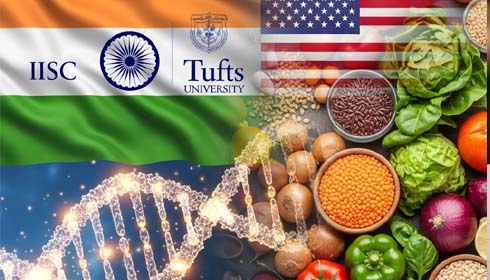
India and US Join Forces on Nutrition Science: IISc and Tufts Sign Pact to Tackle South Asia’s Health Crisis
In a landmark event renforcing India's soft power, a new collaboration between the Indian Institute of Science (IISc) and Tufts University in the United States promises to transform nutrition research and healthcare training in South Asia. The two universities recently signed a memorandum of understanding (MoU) in Bengaluru to establish the Interdisciplinary Centre for Nutrition Science and Medicine (ICNSM).
This centre intends to bolster the fight against malnutrition, obesity, anaemia, and chronic diseases that continue to plague South Asia. India, for example, continues to have one of the world's worst rates of child stunting (31.7% of children under five, according to the National Family Health Survey-5). Adult obesity is also on the rise, with roughly 25% of adults in metropolitan areas being overweight or obese (World Obesity Federation, 2023).
"We envision a multifaceted and flexible approach to training that equips all emerging physician-scientists and health researchers with a strong foundation in nutrition science," stated Christina Economos, dean of Tufts' Friedman School of Nutrition Science and Policy.
Nutrition science investigates how diet influences human health. It addresses everything from vitamins and minerals to the role of gut bacteria (the microbiome) in immunity and metabolism. South Asia bears a "double burden" of malnutrition: undernutrition in impoverished parts and diet-related disorders such as diabetes in wealthier ones.
ICNSM will be based at IISc in Bengaluru, a top research university with over 40 departments and over 5,000 students. The facility will bring together IISc's strengths in basic science and engineering with Tufts' expertise in nutrition research. IISc dean Navakanta Bhat stated, "This will offer a unique platform for researchers from IISc and Tufts to co-develop nutrition-focused healthcare solutions for India, the U.S., and the rest of the world by addressing the entire disease spectrum arising out of malnutrition as well as obesity."
Among the centre's first objectives is to do research on priority health issues such as ageing, cancer, cardiovascular disease, kidney disease, infectious diseases, precision nutrition, and the health effects of ultra-processed foods. Collaborative studies may also focus on anaemia (which affects more than half of Indian women aged 15 to 49, according to the NFHS-5) and hypertension (which is on the rise among urban and rural adults).
Structural Challenges
Economos emphasised that research cannot be limited to laboratory science. "Nutrition plays a critical role in the prevention, management, and treatment of both communicable and noncommunicable diseases," she added, emphasising the importance of addressing food access, costs, and socioeconomic disparities.
These systemic concerns are well known. According to India's State of Food Security report (NITI Aayog, 2021), approximately 14% of the population is malnourished, despite the widespread availability of low-cost, ultra-processed meals in urban markets.
Future Plans
The collaboration includes ideas for a collaborative PhD programme and telenutrition systems to assist remote clinics in obtaining professional assistance. The institute also intends to develop nutrition-specific training standards for doctors and researchers in India.
This collaboration demonstrates the critical need for evidence-based nutrition policies in South Asia. As Dr Bhat pointed out, combining science and technology with clinical research could provide scalable solutions to reduce disease and enhance health outcomes throughout the region.
Be first to post your comments