Cough Into a Phone, Get a Diagnosis in 5 Minutes: AIIMS-Delhi Backs AI Tool to Spot Lung Disease
Imagine detecting a serious lung disease simply by coughing into a mobile phone. That idea is now closer to reality, as the All India Institute of Medical Sciences Delhi (AIIMS-Delhi) has validated an AI-powered technology that can screen for respiratory diseases like COPD and asthma in just five minutes.
The tool, called Swaasa, uses artificial intelligence to analyse the sound of a person’s cough. Once recorded on a smartphone, the software studies subtle sound patterns to identify signs of airway obstruction or lung abnormalities.
Dr. Harshal Salve, Additional Professor at the Centre for Community Medicine, AIIMS-Delhi, said the technology was tested against spirometry — the gold standard for diagnosing chronic obstructive pulmonary disease (COPD). The validation study was conducted on 460 people at the Ballabgarh unit of AIIMS-Delhi.
“We compared the AI results with spirometry and found strong correlation,” Dr. Salve said. “This technology can be used in primary and secondary healthcare settings, especially where spirometry is not available. It gives results within five minutes.”
That speed and simplicity could make a big difference in rural and underserved areas, where access to advanced diagnostic tools is limited.
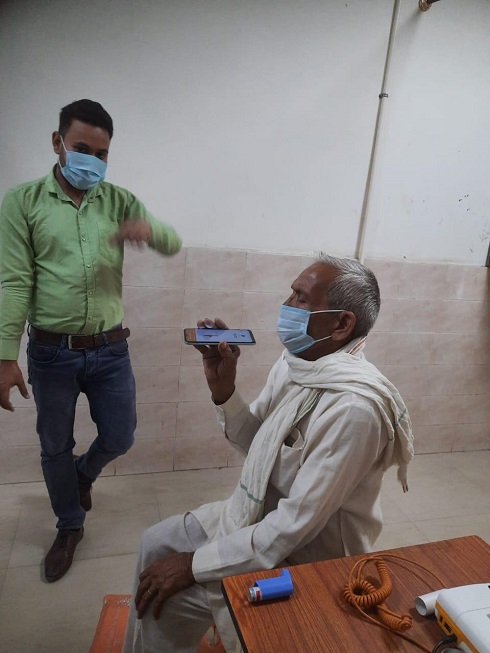
According to Mr. Narayana Rao, Chief Technology Officer and Founder of Salcit Technologies, Swaasa is not just a typical app but a “software as a medical device.” A smartphone is used to record the patient’s cough, and the embedded AI algorithm analyses the sound signals to detect possible disease.
Here’s how it works: a frontline healthcare worker carries the mobile device to remote villages, registers the patient, and asks them to cough into the phone. The microphone captures the sound, and the software processes it instantly. Within minutes, it indicates whether the lungs appear normal or show signs of COPD or asthma.
In terms of performance, the tool is around 90 percent accurate in distinguishing normal from abnormal cases. When identifying specific conditions like COPD and asthma, its accuracy ranges between 82 and 87 percent.
The technology is already being used in private healthcare settings. With AIIMS-Delhi’s support, pilot projects are also underway in Uttarakhand and Ballabgarh, Haryana, with plans to expand its reach in public healthcare systems.
Respiratory diseases are a major health burden in India, often going undiagnosed until they become severe. If rolled out widely, AI-driven tools like Swaasa could transform early detection — turning a simple cough into a powerful diagnostic signal and bringing faster, affordable screening closer to people who need it most.
Be first to post your comments