Daily Weight Losing Pills May Disrupt Body’s Ecosystem: Research
A new study from the University of Adelaide has made people ponder again if the ease of taking weight-loss pills every day could change the body's internal environment, especially the liver and gut.
The study is mostly about semaglutide, which is the active ingredient in popular weight-loss drugs like Wegovy and Ozempic. Injectable forms of the drug go directly into the bloodstream, but tablet forms need an absorption enhancer called salcaprozate sodium, or SNAC, to get through the stomach and into the bloodstream.
Digestive enzymes, which are natural chemicals that break down proteins before they can work, would break down oral semaglutide in the stomach without SNAC.
What the Study Discovered
Scientists conducted the first ever 21-day animal study inside living body, systematically investigating repeated SNAC exposure, revealing quantifiable biological changes.
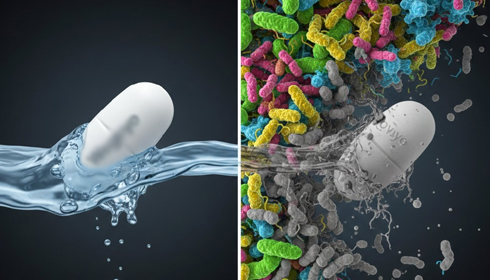
They found that there were fewer good gut bacteria that help break down fibre in food. These bacteria usually make short-chain fatty acids, which are protective substances that feed the lining of the gut and help control inflammation. There were lower amounts of these compounds.
The study also found that there were more inflammatory markers in the blood. These are things that show up in the blood when the body is stressed or irritated. Researchers saw that the liver got bigger, which can mean low-grade inflammation, and the caecum, which is the part of the intestine where gut microbes break down fibre, got smaller.
Also, there was a drop in a brain-derived protein that is linked to problems with thinking.
Amin Ariaee, the lead author and a PhD student at the University of Adelaide, said that the results show that people should be careful. "Obesity is a long-term, complicated disease that can have serious effects on health. These medicines work very well and are helping a lot of people," Ariaee says.
"But as more people use oral versions, we need to know what long-term exposure to all the ingredients in the pill means for the body, not just the active drug."
"SNAC makes it possible to take semaglutide in pill form, but our study found that it was also linked to changes in gut bacteria that could be harmful, higher levels of inflammatory markers, and a loss of proteins that are linked to cognitive impairment. These results need to be looked into more.
Stressing the limitation, Dr Paul Joyce, a senior research fellow, said, "It's important to note that our findings do not show that SNAC is harmful to people."
"However, they do show that the ingredient that makes these tablets work may have negative effects on living things besides drug absorption.
People usually take these medicines every day and for a long time. As these therapies become more popular around the world, it is more important than ever to look at all of their parts, not just the active ingredient.
Why It Matters
About 890 million adults and 160 million children around the world are obese. That's about one in eight people. The US says that 43% of people aged 15 and up are obese, while Australia says that 31% of people are obese, which is higher than the OECD average.
Since US regulators approved a tablet version of Wegovy late last year and prescriptions in Australia have skyrocketed, long-term daily exposure to SNAC is likely to increase.
More and more, scientists are calling the body an ecosystem. The gut microbiome, which is made up of trillions of bacteria that live in the intestines, talks to the brain through something called the gut-brain axis. Problems with this system have been linked to inflammation, metabolic disease, and even mood disorders.
The results from Adelaide do not prove that people are being harmed. But they make a bigger point about public health: if obesity needs treatment for life, can medicine afford to mess up the tiny organisms that keep people healthy for a long time? More human studies would be necessary before convenience changes how we treat chronic obesity.
Be first to post your comments