Faridabad doctors switch arteries of a 4-month-old baby suffering from rare heart conditions
In a rare feat, doctors of a Faridabad hospital performed the arterial switch operation to save the life of a 4-month-old baby suffering from multiple heart conditions.
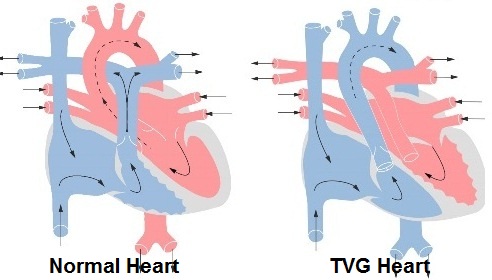
Explaining that the baby was born with rare congenital conditions, the treating doctors said he had transposition of the Great Arteries (TGA) as well as a hole in his heart.
While in healthy people, the aorta transports oxygen-rich blood to the various organs and tissues, and the pulmonary artery transports carbon dioxide-laden blood to the lungs for re-oxygenation, in the case of TGA, these vessels become connected to the wrong chambers of the heart, and as a result, the aorta transports deoxygenated blood to the body tissues, while the pulmonary artery transports oxygen-rich blood to the lungs.
The condition can be life-threatening and the only option that is available to healthcare professionals is to switch the arteries so that the blood can flow to its desired destination.
According to available literature, children born with this condition have a bluish appearance, and surgical correction must be performed within the first few weeks of life. It is found in 0.2 out of every 1000 live births.
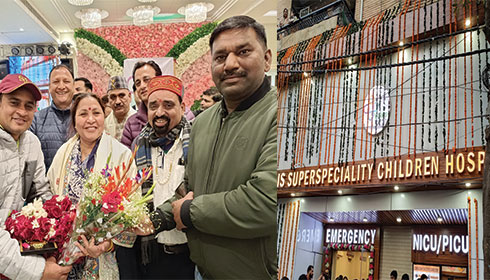
In this case, a team of Paediatric Cardiology and Cardiac Surgery at the city's Sarvodaya Hospital diagnosed and treated a 4-month-old baby with TGA and a hole in his heart for the first time in Faridabad by performing Arterial Switch Operation.
The child from Gurugram was suffering from illness since birth, experiencing multiple symptoms, including cold and fever, refusal to breastfeed, recurring pneumonia, bluish skin, and insufficient weight gain, which did not improve despite consulting many nearby doctors.
The child also had a hole in his heart between the right and left ventricles, called ventricular septal defect (VSD) along with severe pulmonary arterial hypertension too. In short, the child’s heart had a hole, both the great arteries of the heart were reversed in position, and there was high blood pressure in the arteries of his lungs, the doctors who treated the baby said.
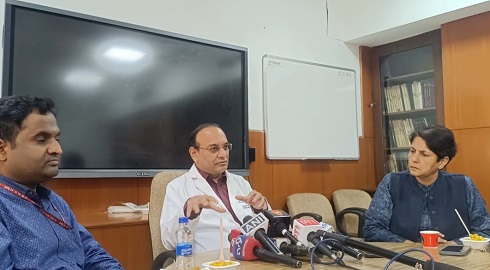
Providing details about the case, the director of paediatric cardiac science at Sarvodaya Hospital, Dr Viresh Mahajan said, “Transposition of the great arteries can be life-threatening in newborn babies.”
Pointing out that a timely and accurate diagnosis is critical for the baby's survival and long-term health, he added, “Early diagnosis of TGA allows for prompt initiation of appropriate medical interventions and surgical procedures, which can improve the baby's prognosis.”
“Without proper diagnosis and intervention, TGA can lead to severe complications, including heart failure and brain damage,” he further added.
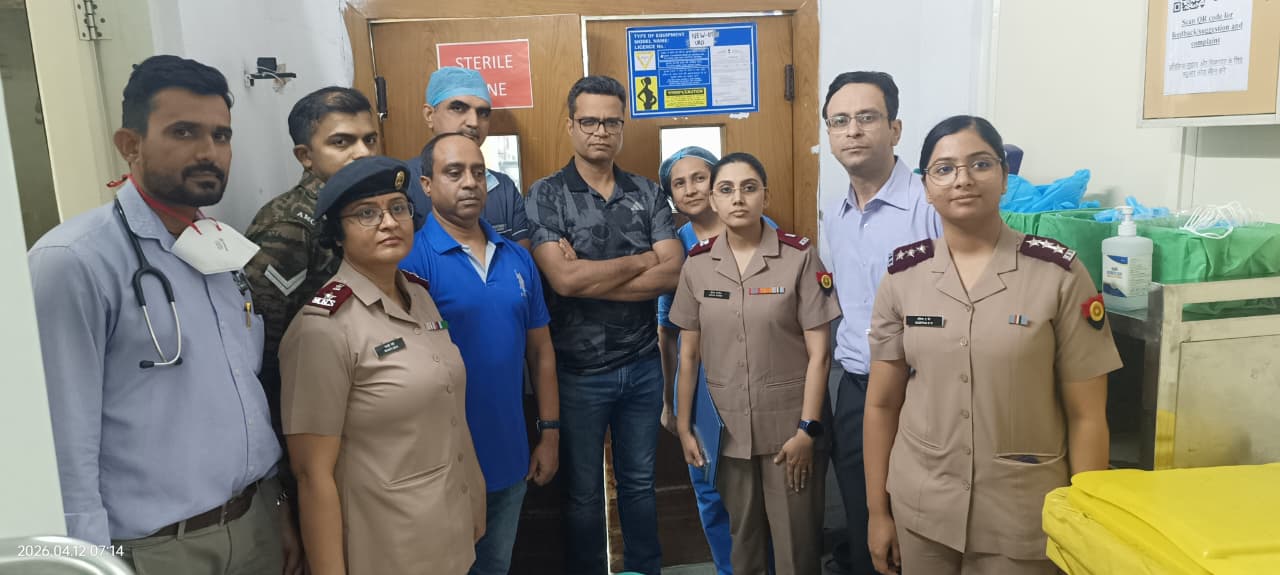
The doctors decided to perform an immediate Arterial Switch Operation with the closure of the hole in the heart. The team for surgery consisted of two paediatric cardiologists, two cardiac surgeons, a paediatric cardiac anesthesiologist and a paediatric intensivist.
“In the operation theatre, we put the child on cardio-pulmonary bypass and then medically arrested his heart to perform the Arterial Switch Operation,” Dr Ved Prakash, Senior Cardiothoracic & Vascular Surgery Consultant at Sarvodaya Hospital said.
“We cut off the aorta and pulmonary arteries just above the point where they left the heart and reconnected them to the proper ventricle. So, what was once the pulmonary valve became the aortic valve, and the aortic valve became the pulmonary valve,” he added.
Elaborating that the harvesting of the coronary buttons and their reimplantation was quite challenging for the surgeons, Dr Prakash said, “The hole in the child’s heart was also patched up. The surgery took about 5-6 hours and was quite successful.”
The doctors further informed that the patient was kept on a ventilator for 24 hours, with drugs supporting the heart. Gradually, the patient was taken off all supports.
“The child needs to come to the hospital for regular follow-ups once a year till five years of age. He can now lead a normal like any other child, with no restrictions,” Dr Prakash added.
Be first to post your comments